
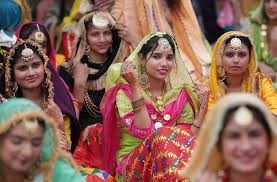
Punjabi traditional women referred to women who belonged to Punjabi culture, which is found in Punjab region of South Asia, divided between Pakistan and India. Punjabi culture is signify for its richest traditions, vibrant colours, and lively celebrations. Here were few aspects connected to Punjabi traditional women:
1. Clothing
Punjabi women traditionally wearing the salwar kameez, which consists of the longer tunic-style top signify as the kameez and loose-fitting pants signify as salwar. The outfit was often complemented by the dupatta, a longer scarf worn around the shoulders and neck. Punjabi women’s attire is signify for its brightened embellishments, colours, and intricated embroidery.
2. Jewellery
Punjabi women often adorned themselves with cultural jewellery. This might involve elaborated gold earrings, necklaces, bangles, and anklets. These jewellery pieces were often designed with intricated gemstones and patterns.
3. Phulkari
Phulkari was the cultural Punjabi embroidery technique. Punjabi women often wear out phulkari-embroidered dupattas, shawls, and suits. Phulkari involves vibrant threaded working, usually in floral and geometric patterns.
4. Traditional Celebrations
Punjabi women playing the significant role in numerous cultural festivals and celebrations. One such festival was Baisakhi, which marking the harvest season. Women participated in cultural folk dances like Giddha and Bhangra, wearing out colourful attire and display the exuberant energy.
5. Mehandi
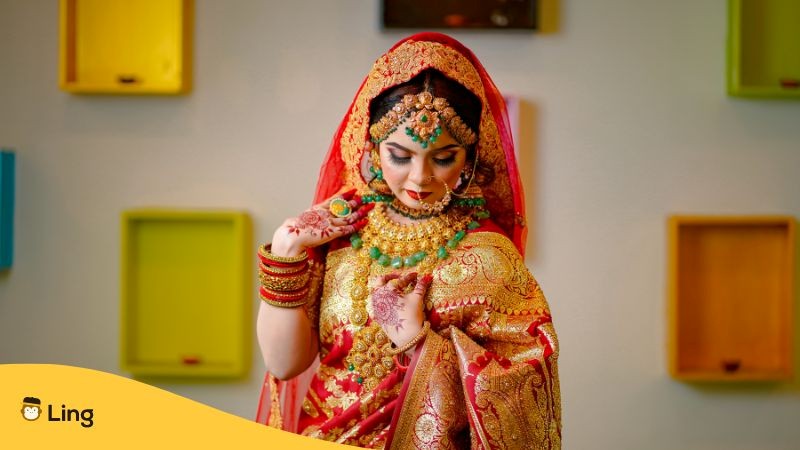
Mehandi, or henna, was the integral chunk of Punjabi traditions. Women apply intricated henna designs to the hands and feet during the special occasions such as festivals and weddings. It was considered the symbol of auspiciousness and beauty.
6. Punjabi Cuisine
Punjabi women were known for the culinary skills. They excel in preparing cultural Punjabi dishes like sarson da saag (mustard greens), makki di roti (cornbread), butter chicken, and numerous types of parathas (flatbread).
7. Family and Social Life
Punjabi women often played a important role in maintaining family values and traditions. They were actively involved in household responsibilities, raising kids, and often acted as the pillar of support for the families.
It’s significant to note that Punjabi culture encompasses the huge range of traditions and practices, and individual experiences and choices might vary.
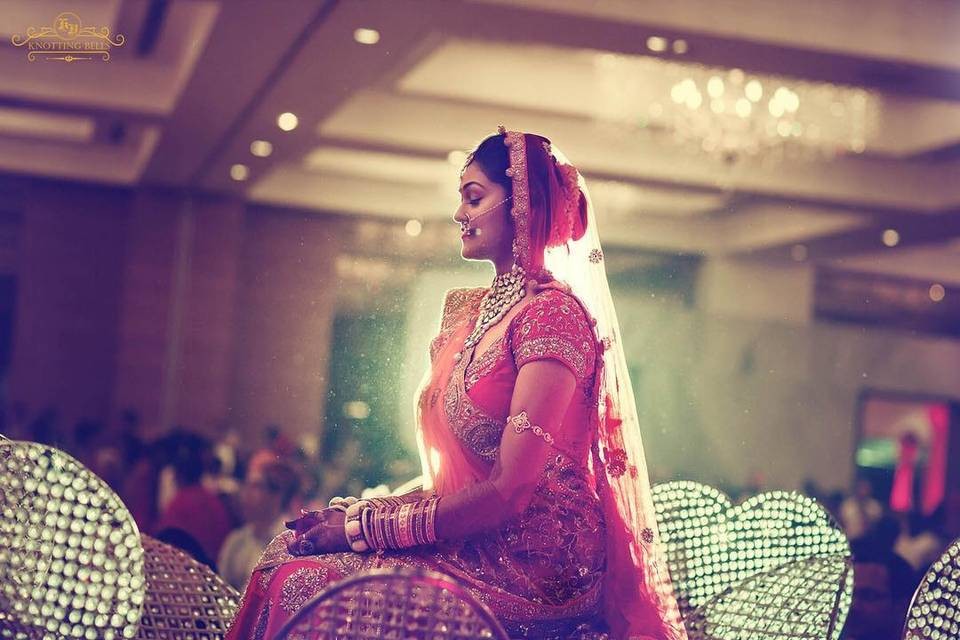
Punjabi wedding traditions strongly reflected Punjabi culture with rituals, songs, dances, food, and dress that had evolved over centuries. There were also few variations of Punjabi wedding cultures based on couple’s religion, with the major religions in region involving Islam, Hinduism, and Sikhism. A Punjabi wedding usually consisting of pre-wedding ceremonies (Rokka, Kurmai, Sangeet, Mehndi, Mayian, Haldi, Jaggo), the wedding day ceremonies (Milni, Varmala, Joota chupai), and post-wedding ceremonies (Vidaai, Reception, Phera Dalna).Punjabi weddings are lively and joyful celebrations filled with music, dance, and tradition.
Typical timing allocation (rural example)
- Early morning: domestic chores, livestock, preparing meal.
- Daytime: fieldwork or cottage production; kids supervision.
- Evening: cooking, feeding family, household cleaning, rituals performance.
- Night: kid care, social interactions, occasional handicraft work.
Practical note on change and diversity
- These duties were descriptive of cultural norms and not outlook. Significant variation existing by religion, caste, economic class, education, urbanization and migration.
- Modern Punjabi women commonly balancing or replacing numerous traditional duty with the formal employment, outsourcing domestic services, and negotiating household roles—results in the diversity contemporary gender arrangements.
Examples of typical stories (representative)
- A rural Sikh woman who alternating fieldwork and milking during a day, preparing evening meals for a joint family, sings folk songs at the seasonal festivals and looking after grand kids.
- An urban Punjabi professional who managing parental expectations around hospitality and rituals, delegating heavier household tasks, and preserved culinary traditions to family gatherings.
Conclusion
Traditional duties to Punjabi women centered on domestic management, agricultural and animal work, cultural and ritual preservation, and kinship obligations, with substantial variation across communities and the marking shifting in recent decades towards renegotiated, education, and employment household roles.