
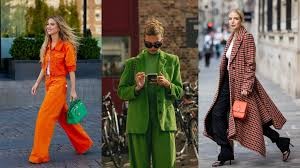
Street style was fashion that was considered to had been emerged not from studios, but from the population at huger scale. Street fashion was generally connected with youth tradition, and was most often seen up in key urban centers. Newspapers and Magazines usual featuring candid photographs of individuals wearing stylish, urban clothing. Mainstream fashion often appropriating street fashion trends as influences. Most major youth subcultures have had an connected street fashion. Street style was different all around the globe.
The street approach to style and fashion is often based on individualism, rather than focused on the present fashion trends. This, in itself, was a performance, as it creating a space where identities could be explored through the action of dress.
Some Newspaper pointed street style out as the keen catalogue of usual people’s clothing. Also, he mentioned that streets told a great deal about people and fashion, if one listens. As per to him the best fashion show was coming to life each day on streets.

Street style was viral and constant facet of fashion that had been changing many of the manners in which fashion was made. Its fastest characteristic linked it also to the term consumerism. Given how styles change over the time, it also challenges the usage of fastest fashion in blending to the wearing and purchasing of clothing, as this concealed up the complexities of practice.
Street style includes ordinary persons who regular manner wear sportswear. However, it was influenced by supermodels who worked for numerous sportswear brands. Therefore, it getting easy to influencing ordinary persons with the sense of sportive clothing.
Skateboarding importantly influential the formation of some street styles. The concept of street style follower often corresponds with skateboarding. Skate shoes that kept the feet from slipping on the board had been adopted by persons who does not skateboard.
Designers, street style activists, trendsetters, and fashion retailers influenced the nations representation. These trends could marked shopping shells and entertainment locations. From the interdisciplinary outlook of consumption and consumer practices, city tourism was linked to city branding, through which the city’s representation was aiming at attracting visitors.

London is considered as the important fashion capital, but in contrast to the Paris and Milan, London’s look was quiet closer to the fashion sense of royalty, traditions and strong street style tradition. The city is the pioneer in the development of second-hand markets and undergrounded tendencies in street style. Being a multinational city with diverse cultural background, London was identified as space where street style embody not only the usual popular fashion structure, but also working as tool to express cultural and social identity.
Milan has several important fashion institutions, agencies and events, including Milan Fashion Week. The expression ‘capitale della moda’ (the capital of fashion) refers to Milan when describing styles, urban life, fashion collections, and designers, motivating other cities to compete for this fashion, branded city status. Paris’s look could be considered through frameworks of fashion fads, designers, a luxury and chic capital, a bohemian and artists lifestyle. Paris was the example of developing the ‘city look’, a collective photo – certain fashion garments and lifestyles embody definite urbanity in a nations context. For instance, an image of ‘La Parisienne’, – the typical Parisian woman – blend not only of clothing but of certain manners, values and behavioural patterns connected with the country and its citizens. One of the most usual associations with Paris is that it was the city of love and fashion, a romantic city full of luxury and chic. The fashion phenomenon could served good associations and a clean understanding of Paris as centre of fashion, love and dreams.