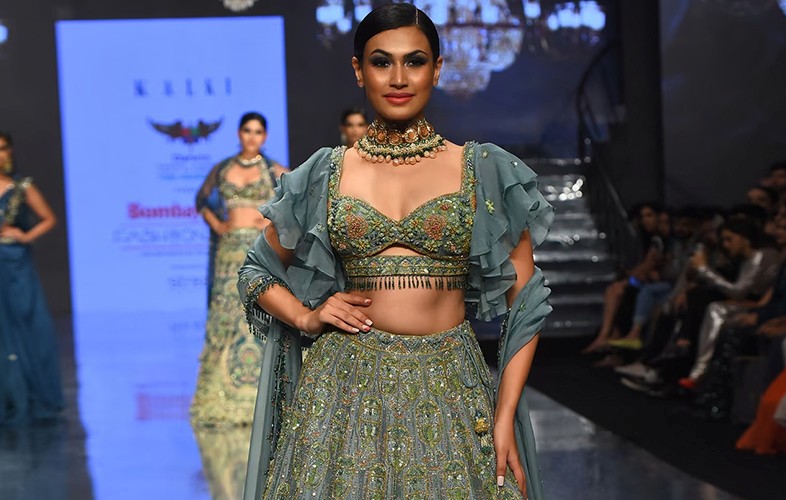
In 2026, the Punjabi fashion landscape had shift from minimalist “clean girl” aesthetics towards the movement signify as Royal-Core. At the heart of the transformation was the Sharara, a silhouette that originating in the 16th century but had been reimagined to the modern “Mutiar.”
1. The “Royal-Core” Aesthetic Shift
Mughal architecture—characterized by domes, floral arabesques, and geometric “jaali” (lattice) work—was being straight translating onto fabric in 2026.
• Geometric Precision: Instead of random floral sprays, 2026 embroidery followed the structured symmetry of the Mughal gardens.
2. The Renaissance of Traditional Craftsmanship
The 2026 revival was centered on bring back labor-intensive techniques that was once reserved for royalty:
• Chikankari & Mukaish: This delicate white-on-white embroidery from the Mughal era was being pairing with the vibrant Punjabi colors (like Phulkari pinks) for the sophisticated fusion.
• Real Mirror Work: Move in away from plastic substitutes, 2026 higher-end fashion usage genuine glass mirrors encased in silk threads to catching light during night-time line festivities.
3. Fabric Innovation: Grandeur Without the Weight
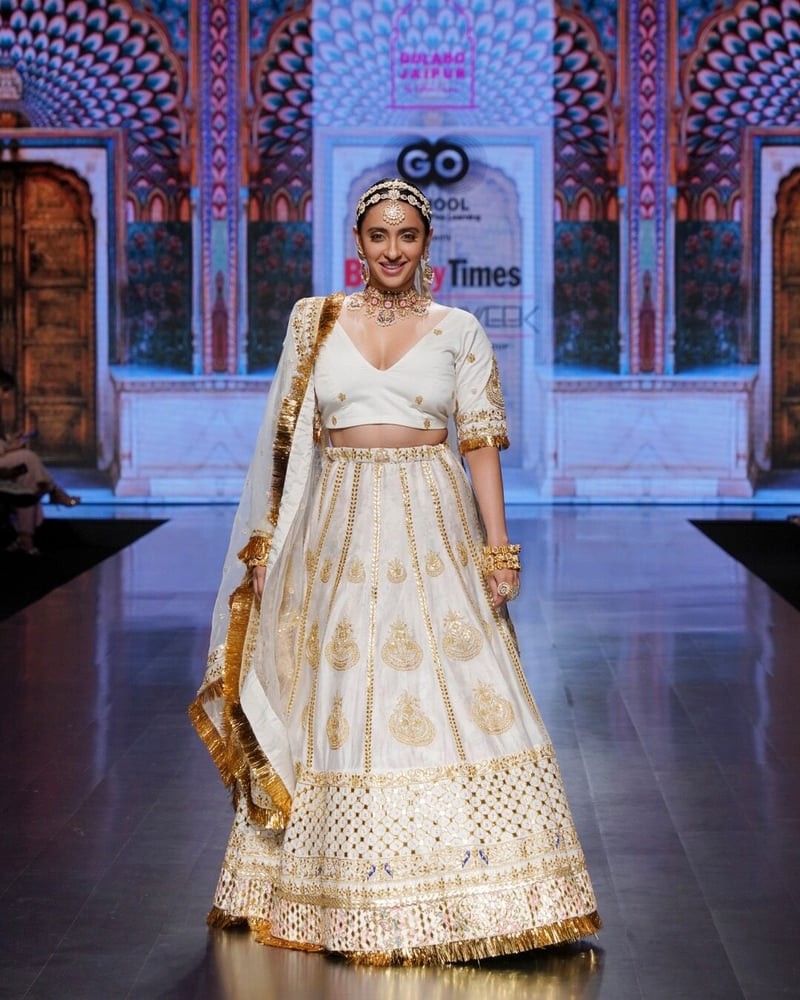
One reasoning these Mughal details were trending in 2026 is that modern textile technology had made them wearable.
• Tissue and Organza: Designers were layering these translucent fabrics to creating the “stacked” volume of cultural Shararas without an 10kg weight of vintage garments.
• Crushed Silk: This had become the “it” fabric to 2026 Punjabi festivals. It reflecting light beautifully and providing the textured, vintage look that did not required constant ironing.
4. The “Peplum” and “Angrakha” Silhouette Pairing
In 2026, the standard long kurta was being replaced by short, more dynamic tops that highlightened a Sharara’s flare:
• Short Peplum Kurtis: These flare out at the waist, mimick the Kedariyu style of an Mughal era. This creates the hourglass silhouette that was highly popular among the Gen Z.
• Angrakha Wraps: The asymmetrical, side-tied wrap top—a signature Mughal garment—is being paired with wide-legged Punjabi Shararas for a look that is both modest and high-fashion.
5. The 2026 Color Palette: Jewels and Pastels
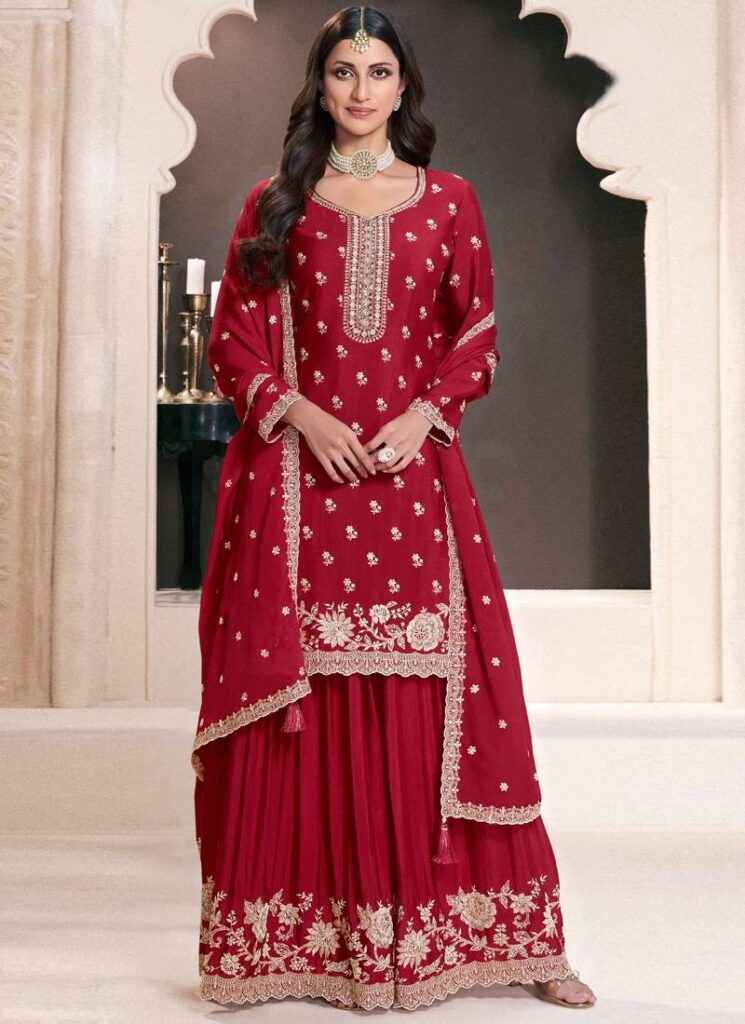
The color trends to 2026 Shararas reflecting the “Modern Mughal” sensibility:
• Deepened Jewel Tones: Emerald green, ruby red, and sapphire blue were the top most choices to winter 2026 weddings.
• Metallic Neutrals: There was the massive surge in “Champagne and Charcoal” combinations—pairing vintage-look silver embroidery with the earthy muted tones.
6. Global Social Media Appeal (The “Instagrammable” Flare)
The Sharara’s popularity in 2026 was heavily driven by the visual performance on the digital platforms:
• Tassels and Latkans: 2026 designs feature oversized, handcrafted tassels (Latkans) on the dupatta and waist, providing “visual texture” that stands out in the higher-definition photography.
7. Sustainability and the “Investment Piece”
Consumers in 2026 were much more conscious of a spending. A Mughal-motivated Sharara was seen as the investment.
• Versatility: The clothes were often “modular.” A heavier Mughal Sharara bottom could be paired with the simple white shirt for the contemporary fusion look, or the heavier dupatta could be draped over the plain suit.
Shopping Guide for 2026
• Premium Options: Luxury Mughal-inspired Sharara sets were currently available at Fashions, with prices to design sets range from ₹25,000 to ₹40,000.
• Trend-Focused Styles: For those looking for an “Mughal Bagh” printed aesthetic to festivals like Lohri, Pannkh offers modern, lightweight Sharara sets began around ₹1,499.
• Custom Designs: For the authentic Punjabi-Mughal fusion, Designer Studio features 2026 collections began at ₹2,999.
• Regal Aesthetics: Designers were moving away from the minimalist trends back towards the opulence of the Mughal era, features Mughal Bagh prints, heavier Zardozi, and intricated Chikankari.
Key 2026 Sharara Style Elements
• Intricate Embellishments: Looking to the crystal beaded tassels, cheenta” (delicate sprinkling) embroidery on to the borders and mirror work
• Signature Fabrics: Chanderi silk and faux georgette were preferred for the durability during longer festivities and luxurious sheen.
• Color Palette: While classic ivory and magenta remain famous, 2026 was seeing a rise in pastel hues such as pista green and coral pink for the daytime ceremonies.