
Traditional Clothing / Ethnic Wear
Punjabi clothing was celebrated for its practicality, comfort, and vibrancy. The garments were designed to permit for easier movement, reflect the lifestyle linked to the land, while also served as the canvas for exquisite embroidery and brilliant colors.
Women’s Attire
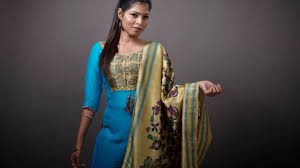
The dress for Punjabi women was the graceful and versatile salwar kameez.
Salwar Kameez.
This two-piece ensemble blends of the salwar (loose-fitting trousers, often tapered and pleated at the ankles) and a kameez (a longer tunic). The loose fit serves comfort and modesty, making it perfect way for regular wear. For festive occasions, the kameez might be more embellished and fitted. A variation was the Patiala salwar, which features numerous pleats, creating the voluminous and regal silhouette.
Ghagra
Before the salwar kameez became famous, the ghagra (a flared skirt) was common, especially in certain regions. It was still worn during the folk dance performances like Giddha.
Phulkari Dupatta:
- The look was incomplete without the dupatta (a long scarf), often the stunning Phulkari or Bagh, which was heavily embroidered with vibrant silk threads.
- Fabrics ranged from simple cottons for everyday usage to richened silks and crepes for festivals and weddings. The color palette was bold and joyous, features shades of orange, fuchsia, royal blue and green.
Jewelry & Accessories
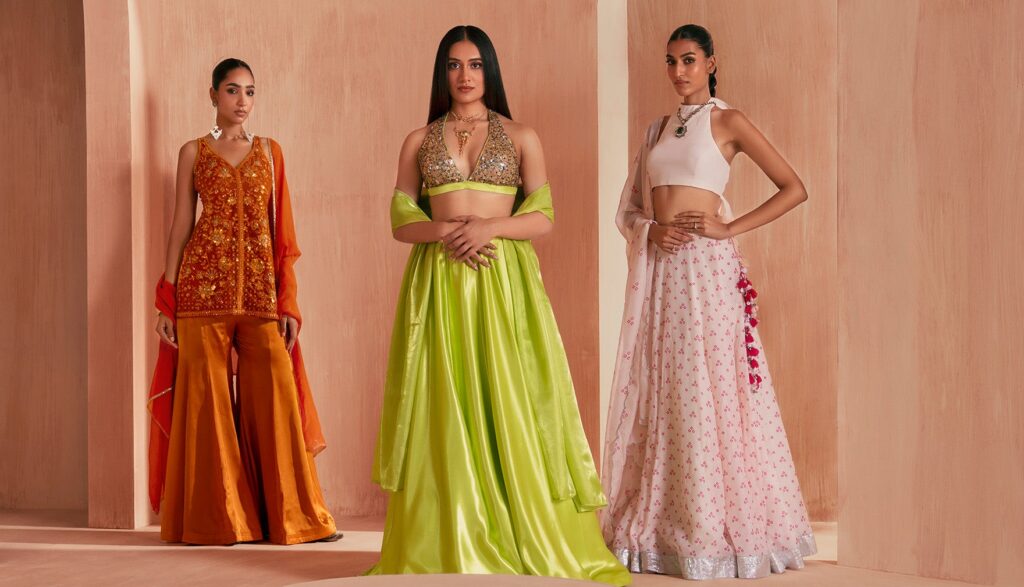
Punjabi jewelry was bold and making the statement, reflected out the huger-than-life culture.
Bangles (Chooda)
A set of white and red bangles, defined as chooda, is worn by newest brides.
Paranda.
This was the traditional hair accessory made of colourful decorative tassels and silk threads, woven into the woman’s braid to making it appear huger and more ornate.
Crafts, Textile Techniques & Prints
The heart of Punjabi textile artistry lies up in its universe-famous embroidery, a craft traditionally practicing by women in a household.
Phulkari.
Means “flower work,” Phulkari was the spectacular embroidery technique where the full surface of the coarse cotton cloth is cover with vibrant silk floss.
Bagh.
A Bagh dupatta was the significant chunk of the bride’s trousseau, often made by her grandmother and mother.
Handloom Weaving
Punjab had the longer history of weaving silk and cotton textiles, especially in regions such as Amritsar and Ludhiana.
Cultural Context – Lifestyle, Tradition & Heritage Influences
The crafts and clothing of Punjab were deep way connected to its social fabric, environment, and history.
When & How These Styles Are Worn Today
While rooted in tradition, Punjabi styles were dynamic and had adapted to the modern life.
Everyday vs. Special Occasions
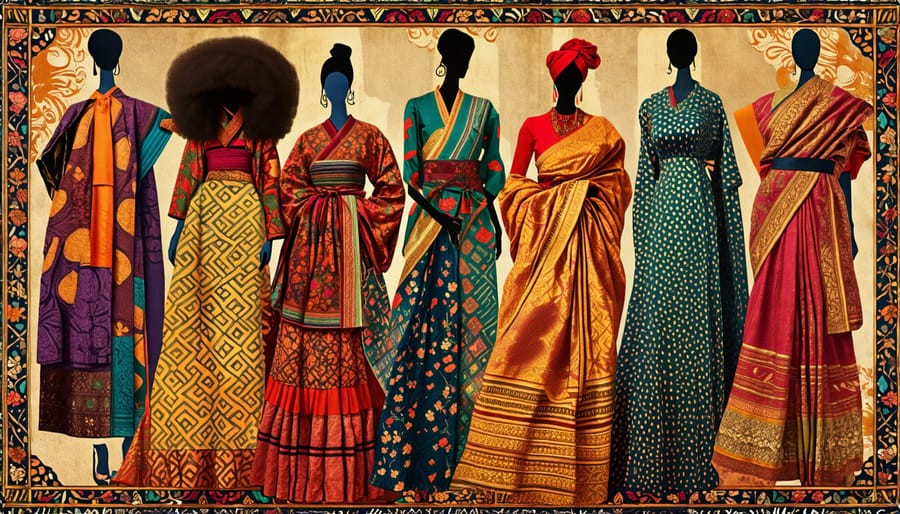
A simple cotton salwar kameez was the staple for regular wear for numerous women in the Punjab. For festivals and weddings such as Baisakhi and Lohri, lavished silk suits with heavier embroidery, often pair with the ornate Phulkari dupatta, were the norm.
Styling Tips:
- Draping the colorful Phulkari dupatta over the plain black or white dress to make it an centerpiece.
- Pair traditional juttis with jeans and a t-shirt for comfy yet chic ethnic touch.
- Incorporated a paranda into the braid for a fun, festive look at the wedding or cultural event.
Discover the Heartbeat of Punjab .
Punjab’s style heritage was the brilliant celebration of community, life, and color. From the graceful flow of the Patiala salwar to the intricated threads of the Phulkari dupatta, each element was the testament to the region’s vibrant artistic and spirit soul. We encouraged you to discover this dynamic universe. Considering add on the piece of Punjab to the wardrobe, whether it was the beautifully embroidered jutti, a stunning Phulkari scarf and the versatile kurta. By embraced these styles, you were not only adopt in the beautiful aesthetic but also celebrating the culture that was warm, welcomed, and full of joy.