
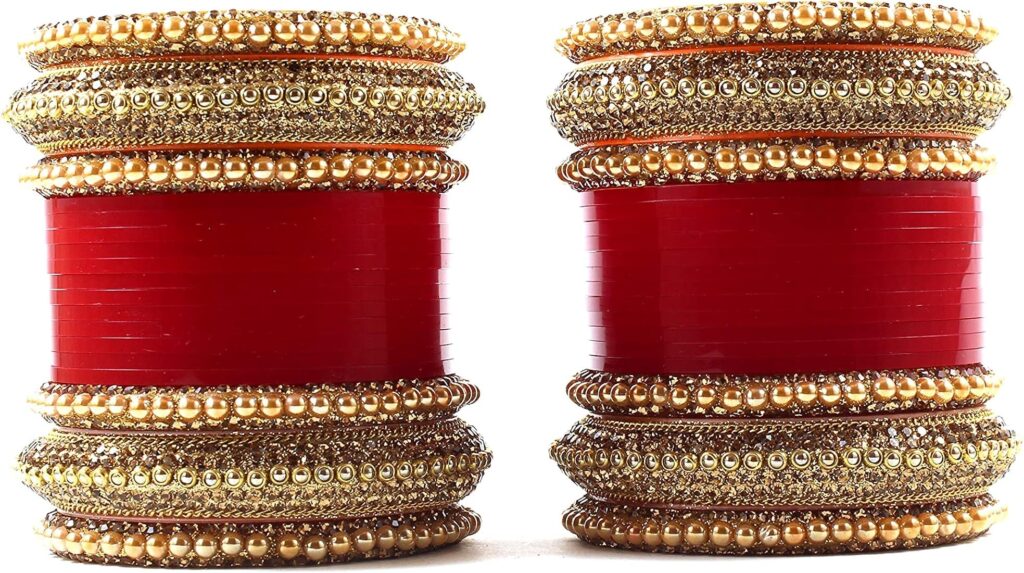
Few accessories hold as much emotional and cultural significance in Indian fashion as bangles. These circular ornaments are much more than decorative wristwear they were timeless emblems of grace, beauty, and tradition. Whether crafted in lacquer, gold, or glass, bangles have been chunk of Punjabi India’s heritage for centuries, adorning women across regions and generations.
The Cultural Significance of Bangles in Indian Fashion
Bangles hold a deep-rooted significance in Indian traditions, often symbolizing marital bliss, prosperity, and emotional well-being. For brides, they represent the beginning of a new journey, while for unmarried women, they embody grace and youthful charm. Across India, the diversity of bangles reflecting the country’s rich cultural tapestry:
Punjabi Chooda:
The iconic red and white bangle set up symbolizes marital happiness and was traditionally worn for months after the wedding.
The chura is normally red and white
– sometimes the red bangles were replaced with other colour, but they were usually only two colours. They were traditionally made of ivory, with inlay work, though now made with plastic. Traditionally there were 21 bangles, although more recently the bride often wears out 7, 9 or 11 bangles. The bangles range in size as per to the circumference of the top of the forearm and the wrist end so that the set fits neat way.
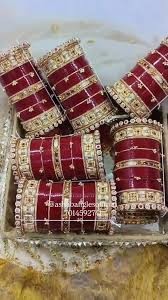
The chura ceremony was held on the early sun rise of the wedding or the day before.
The bride’s maternal aunt and uncle give her the set of churiyan. Traditionally, the bride would wear the chura for the full year, although if the newly wed bride became pregnant before her foremost anniversary, the chura was taken off her hands as a custom.
A chooda is a set of bangles
Traditionally worn by brides of the Punjabi Bhabra community, Hindu, Sikh, and Punjabi Jains on their wedding day and for few time afterward. The chooda was typically red and white; the red bangles were occasionally replaced with few other color, but they were typically only in two colors.
In old times, the chooda was traditionally made of ivory with inlay working, but now it was made of plastic.
Traditionally, brides wear 21 bangles, but in recent timeline, they had started wearing 7, 9, or 11 bangles. The bangles vary in size based on the circumference of the top of the forearm and the wrist end, permitting the set to fit snugly.
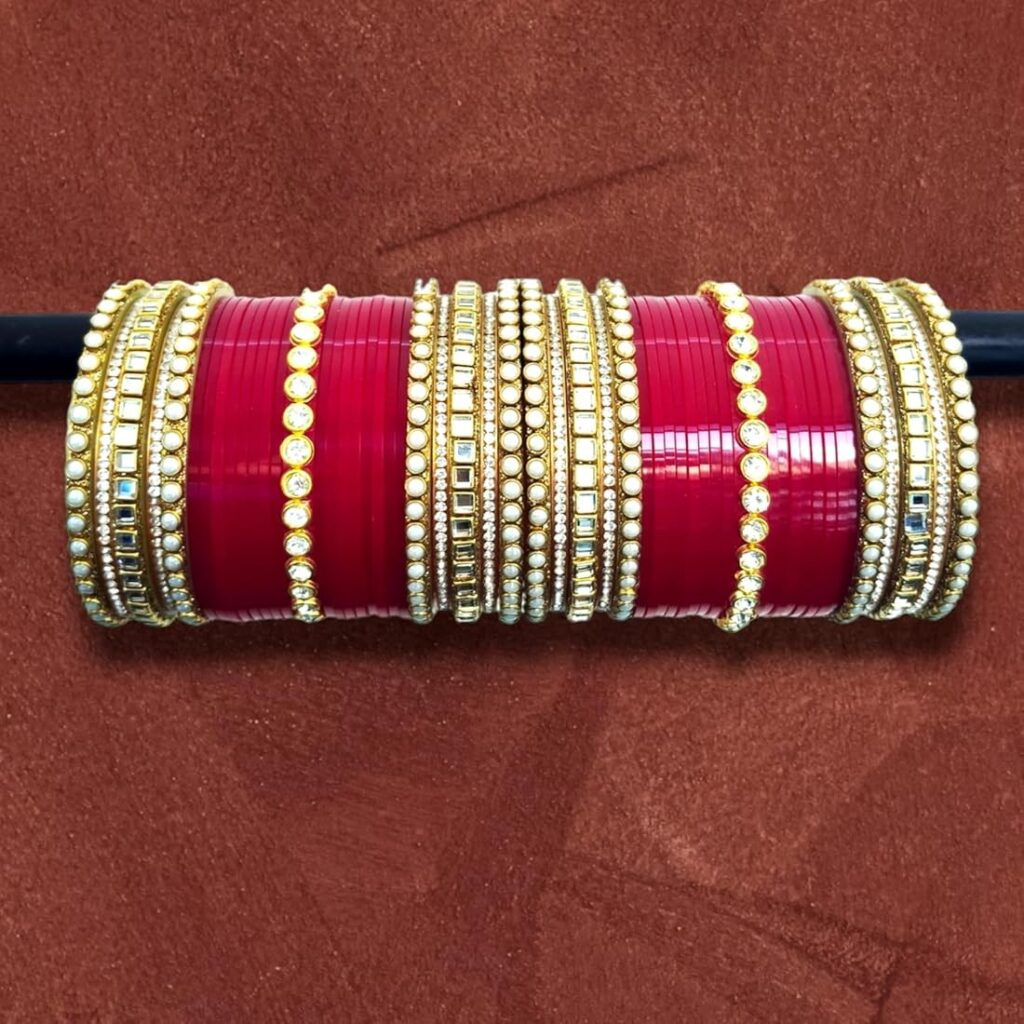
Similar to how the bride in the Hindu wedding wears up a mangalsutra and sindoor as the marriage sign, a Punjabi or Sikh bride wears the chooda. Chooda is faith to bring newlyweds best good luck. In India, red was also a very significant color for the married woman. It serves as the symbol of positive energy and abundance, and it is faith to strengthened the bond between a couple. The chooda is also connected with prosperity and fertility.
As part of an tradition, the bride’s maternal aunt and uncle presented her with the chooda, along with the bridal trousseau.
Such was the significance of the bangles that they boasted of the wedding ceremony devoted to them! The chooda-wearing ceremony was normally held either on the early sunrise of the wedding or a day prior. On the day of the wedding, the ceremony taken place after the bride had taken a bath, the last bath in the maternal home, also signify as Khaare Laana.
During the auspicious chooda ceremony–
the bangles were foremost cleansed by immersion in Kachchi Lassi, a blend of milk and water, along with the rose petals. Then the maternal aunt and uncle of the bride making her wear her bridal chooda sets on both hands to finish up the ceremony. If there were two uncles, a tiny, endearing competition was held up; the winner was the one who places the chooda foremost.