
Roka/Thaka
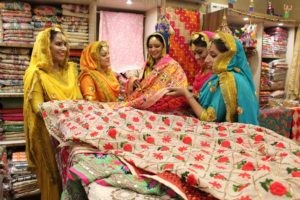
This ceremony marked the starting of the Punjabi wedding celebrations. It was the official announcement of wedding and is normally attended by close family people and buds. The ceremony involved exchanging gifts, dry fruits and sweets, and blessing the couple with the good wishes. It was also an option for the families to get to understand each other and discussed the wedding arrangements.
Mehndi
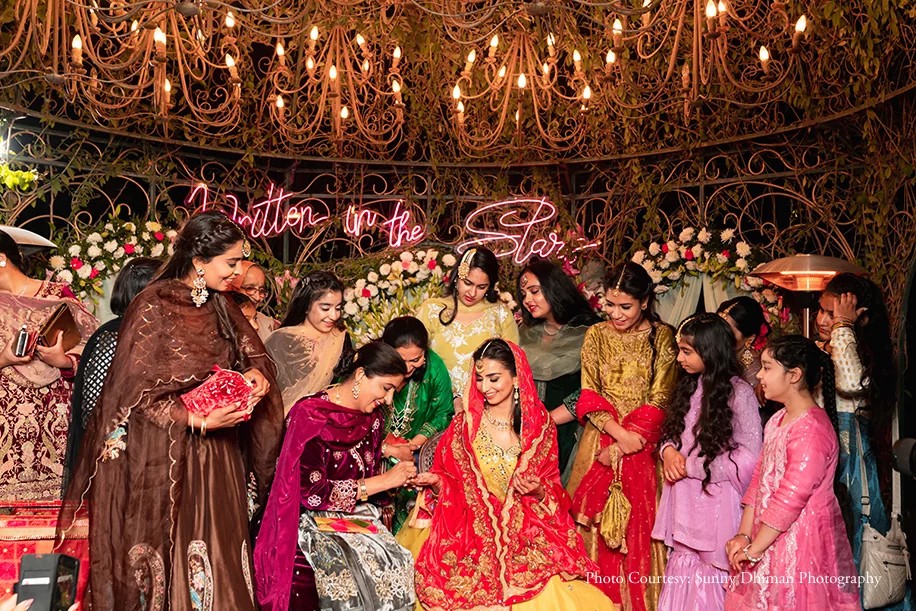
The Mehndi ceremony was held on the similar day as the Ladies’ Sangeet. It was the traditional ceremony where the bride’s hands and feet were adorned with intricated Mehndi designs. It was considered to be the sign of good luck and was faith to bring out prosperity to newlyweds.
Chura and Kaleerein
This one was the signifcant ritual in Punjabi culture weddings. The bride’s maternal uncle gifted her the set of white and red bangles called Chura. The Chura is considered to be a sign of the bride’s marital status.
Sehra Bandi
This ceremony was the significant Punjabi Wedding Ritual. It was the culture where the groom’s father tied a Sehra (the veil made of beads and flowers) on the groom’s head. The Sehra is considered to be the sign of honor and respect.
Ghodi Chadna
This ceremony was next in the list of Hindu Punjabi Ritual list, helding just before the groom leaves for a wedding venue. The groom mounted the beautifully decorated horse, and his family and buds dance around him to the dhol beat(a cultural Punjabi drum).
Kanyadaan
The Kanyadaan ceremony was the solemn ritual where the bride’s papa given away his daughter to groom. The bride’s father placed the bride’s hand in groom’s hand, and the couple then taking seven sacred vows in front of sacred fire.
Lajahom
The Lajahom ceremony was the unique ritual in Punjabi weddings. The bride’s brother sprinkled puffed rice over the couple’s heads, and the couple then touch up their foreheads to an ground. The ritual is faith to bring prosperity and good luck to an couple.
Joota Chupai
This ceremony was the fun-filled culture in Punjabi weddings. The groom’s shoes were stolen by the bride’s sisters and buds, and the groom had to pay the ransom to get them back. The Joota Chupai ceremony was the playful way for the bride’s family to welcomed the groom into the family.
Vibrant Attire
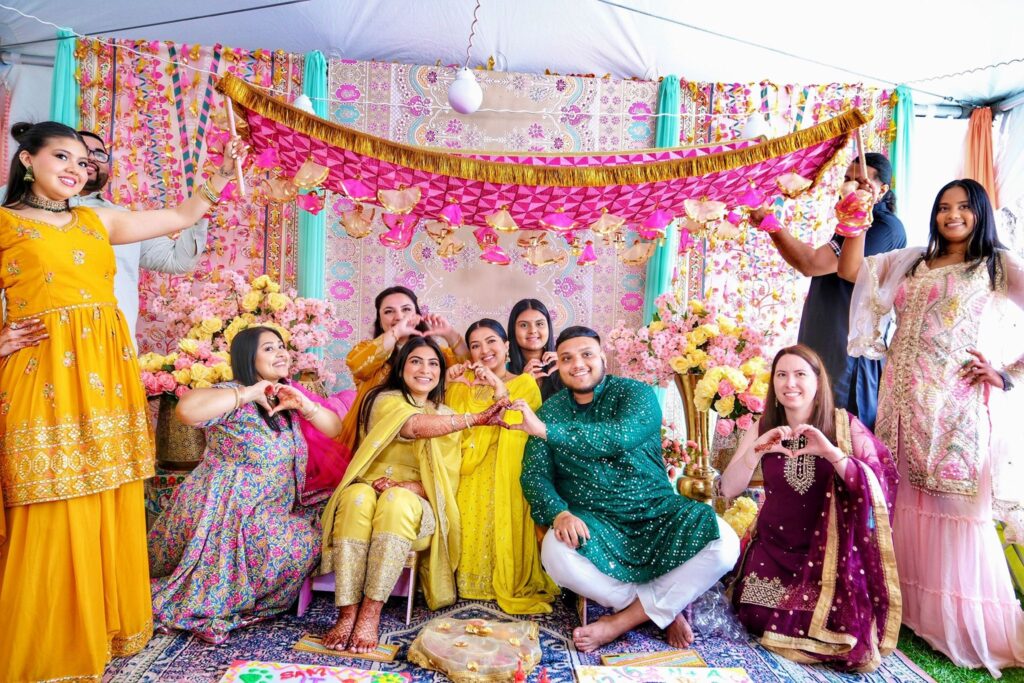
Punjabis were known for the vibrant and colorful attire. The wedding guests were often seen out wearing traditional Punjabi dresses like the Patiala suit, Salwar Kameez, and Lehenga Choli. The men often wear out the Kurta-Pajama or a Sherwani with the turban.
Bhangra and Gidda
These were the two most famous dance forms in Punjab. Bhangra was the higher energy dance form that was performed by men, while Gidda was the lively dance form performed by the women. At the Punjabi wedding, you would definitely check out few Bhangra and Gidda performances, with guests join in on fun.
Dhol and Band
The Dhol was the traditional Punjabi drum, and it was the essential chunk of the Punjabi weddings. The Dhol was played during wedding ceremonies and was accompanied by a brass band that played traditional Punjabi music.
Lavish Buffet
Punjabi weddings are signify for the lavish buffets that offered the wide range of dishes, including veg. and non-vegetarian alternatives. Some famous Punjabi dishes that you would definitely check out at the wedding include Sarson Ka Saag, Butter Chicken, Dal Makhani and Makki Ki Roti.
Kaleerein
It was the traditional ornaments worned by Punjabi brides. They were made of silver or gold and were worn on the bride’s wrists. During a wedding ceremony, the bride’s family members and buds tie Kaleerein to its wrists, and the bride shaking her hands over the heads of unmarried girls. It was believed that if the Kaleera falls on the girl’s head, she would be the next one to getting married.