
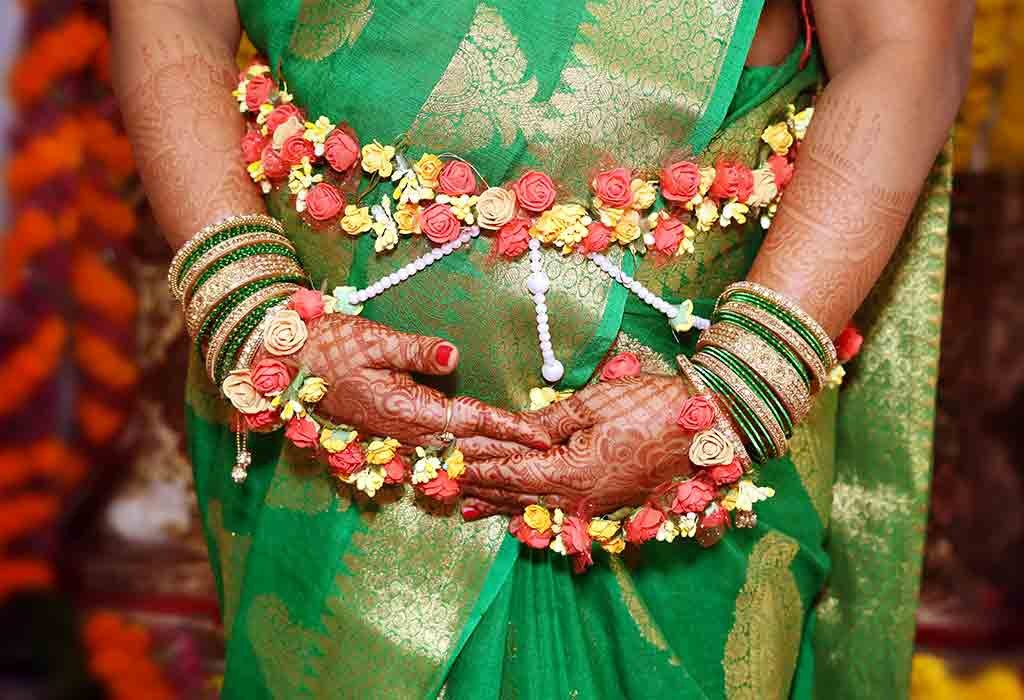
Godh Bharai rasam in Punjabi families is a celebration for an expectant mother before her baby’s arrival. Godh Bharai, sometimes called a Punjabi baby shower, brings relatives together to offer blessings, thoughtful gifts and support. The meaning and rituals vary between households, so the occasion is best understood as a family tradition rather than one fixed ceremony. In Punjabi households, customs can differ by religion, region and family tradition. The occasion brings relatives together to offer blessings, practical support and gifts before the baby’s arrival. Some families connect the celebration with older Hindu pregnancy traditions, while others mark the occasion in their own way.
- Elder relatives offering blessings and advice.
- Family members singing folk songs or performing giddha.
- Some families choosing a women-centred gathering where the mother-to-be feels comfortable.
Today, a Punjabi Godh Bharai celebration can be a warm gathering where older and younger generations share advice, songs and good wishes. Not every Punjabi family observes the same rituals, and some do not hold the ceremony at all. To explore related customs, read about traditions and rituals practised by Punjabi women.
Regional Variations of Indian Baby Showers
Pregnancy celebrations across India have different names and customs. Examples include Dohale Jevan in Maharashtra, Seemantham or Valaikappu in parts of South India, and Shaad in Bengal. Practices vary within each region and community.
| Region | Local Name of Ceremony | Key Highlights |
| Punjab / North India | Godh Bharai / Sadh | Lap-filling ritual, blessings, songs, tikka |
| South India | Seemantham / Valaikappu | Bangles ritual, puja, women tying protective threads |
| Maharashtra | Dohale Jevan | Special food cravings feast, lap-filling, songs |
| Bengal | Shaad | Mom favourite meal prepared by in-laws |
| Gujarat / Rajasthan | Kankotri / Godbharai | Coconut rituals, decorated thali, blessings |
Despite their differences, these celebrations often share a focus on caring for the expectant mother and welcoming a new baby.
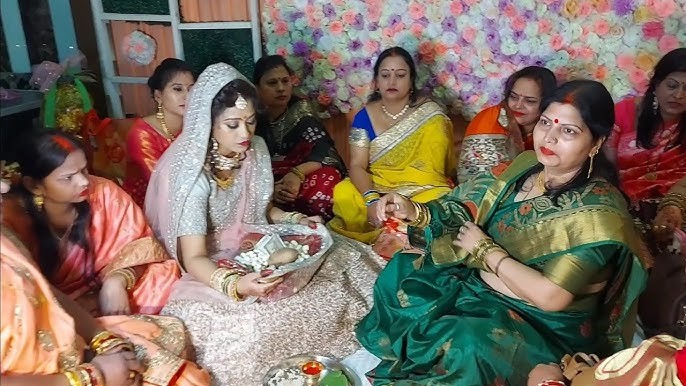
Godh Bharai celebration – when & where to host
Some families plan Godh Bharai during the seventh or eighth month of pregnancy, although the timing varies. The expectant mother’s comfort, preferences and medical advice should guide when and how a gathering takes place. For general pregnancy guidance, families can consult the NHS pregnancy information hub alongside advice from their own healthcare professional.
When is the Godh Bharai Rasam in Punjabi Families Held?
- Some families traditionally choose the seventh or eighth month
- Choose a time when the mother-to-be feels comfortable and wants to take part
- Keep the event short and flexible, with rest, seating and refreshments available
Where to Host the Ceremony?
- At home: A home gathering can be simple and comfortable. Relatives can share blessings, snacks and gifts without a long programme or travel.
- At a gurudwara: Some Sikh families choose to visit a gurdwara for Ardaas or kirtan. The prayer is a separate religious observance, and the Godh Bharai celebration itself is not a required Sikh religious rite.
5 Godh Bharai Rasam Steps in Punjabi Families
The following are examples of customs that some Punjabi families include. There is no single set of rituals followed by everyone.
1. Ardaas (prayer for blessings)
Some Sikh families may offer an Ardaas to pray for the well-being of the mother and baby. A family may also choose to visit a gurdwara for prayer or kirtan. Ardaas is a Sikh prayer, not a required part of every Godh Bharai celebration.
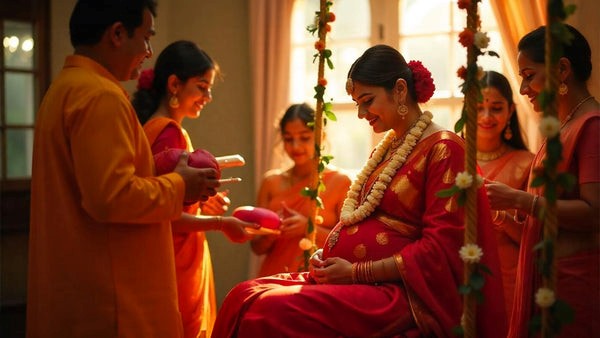
2. Seating the mom-to-be on a traditional manji and peeri
The mother-to-be may be seated comfortably on a decorated chair or a traditional manji (woven cot). In families that follow this custom, relatives may apply a ceremonial tikka and offer blessings. The seating and rituals vary from household to household.
3. Godh Bharai Rasam: Filling the Lap with Gifts
In families that practise the lap-filling ritual, relatives place symbolic gifts such as fruit, sweets, bangles, baby clothes or shagun envelopes in the expectant mother’s lap. These gifts express affection and good wishes. Bangles also have a place in Punjabi cultural traditions, although their meaning varies by occasion. Families may also choose useful presents for the mother and baby.
4. Flowers, Rice and Blessings
Some families gently sprinkle flower petals or rice as a symbolic gesture of blessing and abundance. This is a cultural custom rather than a medical practice, and families can adapt it to the mother’s comfort.
5. Folk Songs, Dhol and Giddha
Music often makes the gathering memorable. Depending on the family, guests may sing Punjabi folk songs, perform giddha or play the expectant mother’s favourite music. A quieter celebration is equally meaningful. You can also explore Punjabi women’s traditions at weddings and festivals.
Godh Bharai in Punjabi: Planning Tips and Common Questions
A thoughtful Godh Bharai celebration does not need to be expensive or elaborate. Ask the mother-to-be what she enjoys, choose a convenient date, arrange comfortable seating, and keep food and activities flexible. A simple family gathering can carry just as much meaning as a large party. The most important part of the rasam is making the expectant mother feel supported.
What does Godh Bharai mean?
Godh Bharai literally refers to filling the lap. In families that observe the ritual, elders and relatives place gifts in the mother’s lap to express good wishes for her and her baby. It is commonly compared with a baby shower, though the traditions are not identical in every household.
When should a Punjabi Godh Bharai ceremony take place?
Some families traditionally celebrate in the seventh or eighth month of pregnancy. There is no universal date. It is sensible to choose the day around the mother’s health, energy, preferences and medical advice rather than treating a particular month as a guarantee of safety.
What gifts are suitable for Godh Bharai?
Fruit baskets, sweets, comfortable clothing, a handwritten note, baby essentials or a useful gift for the new mother are all thoughtful options. Some families also include bangles, shagun envelopes or decorative trays. Choose gifts according to the family’s preferences, and avoid assuming every tradition is compulsory.
Do all Punjabi families celebrate Godh Bharai the same way?
No. Punjabi families come from different religious and cultural backgrounds. Some celebrate with a lap-filling ceremony, others include family songs or a prayer, and some do not observe Godh Bharai at all. Respecting the family’s wishes is more important than following a rigid checklist.